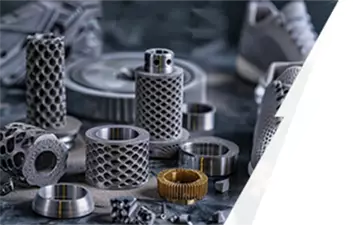
Carbon Fiber 3D Printing Service
Carbon fiber 3D printing has become a key technology in aerospace, automotive, high-end manufacturing and other fields, relying on its core advantages of “high strength, lightweight, and functionalization”. With the maturity of continuous fiber printing technologies (such as Markforged X7) and multi-material composite processes, its applications will expand towards higher performance (such as carbon fiber/ceramic matrix composites with temperature resistance exceeding 300°C) and more complex structures (such as internal layered functionally graded materials) in the future, driving a dual breakthrough in “design freedom” and “performance limits”.
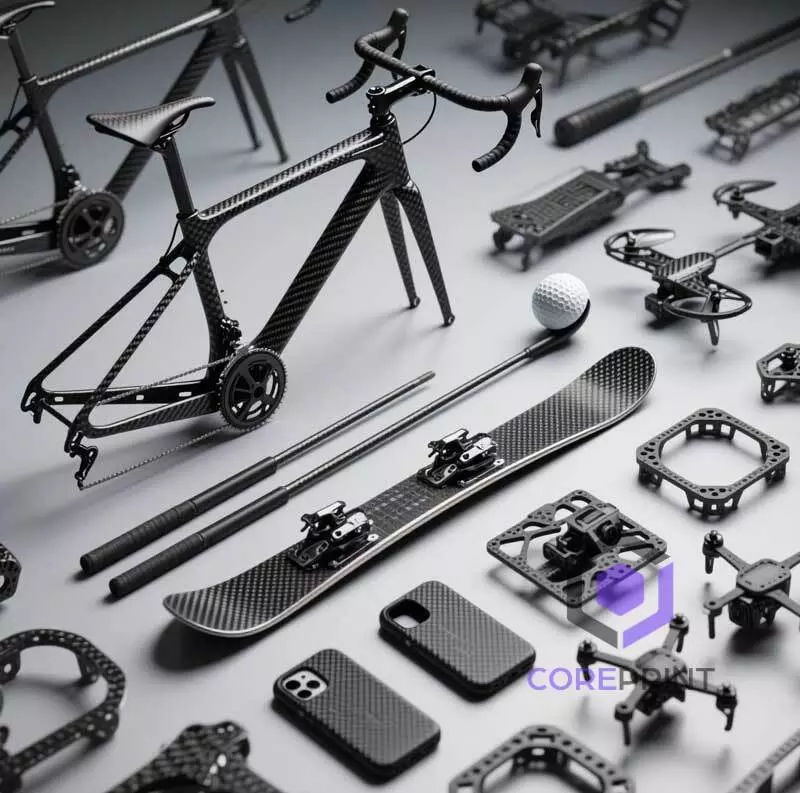
Common 3D printable products:
- Aerospace and Automotive Lightweight Structural Components
- Industrial Tools and Manufacturing Aids Applications include high-precision fixtures
- High-Performance Sports Equipment and Consumer Electronics
What do you want printed?
You can also send us 3D object files at our Email:Jerry.xiao@julyn.cn


Carbon FiberMaterial Properties
| Resolution | Condition | Ultimate Tensile Strength | Yield Stress | Elongation | Hardness | |
| Aluminum (AlSi10Mg) | High (20 μm) | Stress Relieved | 268 Mpa | 180 Mpa | 15% | 46 HRB |
| Normal (30 μm) | Stress Relieved | 345 Mpa | 228 Mpa | 8% | 59 HRB | |
| Large Format (40 μm) | Stress Relieved | 296 MPa | 186 MPa | 10% | 50 HRB |
How Does Carbon Fiber 3D Printing Work?
The carbon fiber 3D printing process generally falls into two categories: short chopped fiber reinforcement and continuous fiber reinforcement. In the short fiber process, carbon fibers (as short strands) are uniformly dispersed in matrix materials like nylon or resin, then extruded and stacked layer by layer via a single nozzle to form lightweight composites (e.g., PA-CF). For continuous fiber reinforcement, a dual-nozzle system is used: the main nozzle prints the matrix material, while a secondary nozzle simultaneously lays down continuous carbon fiber bundles along pre-designed paths (e.g., Markforged’s “fiber guiding technology”) to create high-strength skeletons, ideal for load-bearing structures. Pre-printing involves CAD modeling and topological optimization to reduce material waste. Post-printing steps include curing and support removal. The final products combine high rigidity (strength 3–5 times that of metal parts) with complex geometries, widely used in aerospace brackets, automotive chassis, industrial fixtures, and more.

Get An Accurate Quote Quickly
If you have 3D printing needs, you can leave your email address, and we will reply to you within 30 minutes.
Email:
jerry@coreprint3d.com
Phone:
+86:180 2696 3929
Jieshun Technology Center, Longhua District, Shenzhen
Dongguan Songshan Lake International Innovation and Entrepreneurship Community