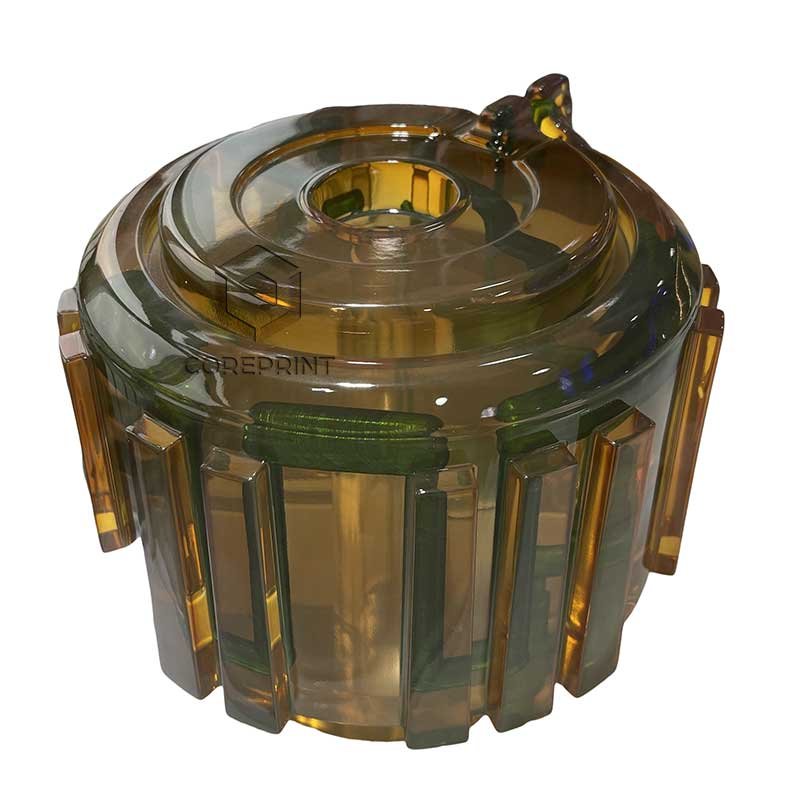
描述
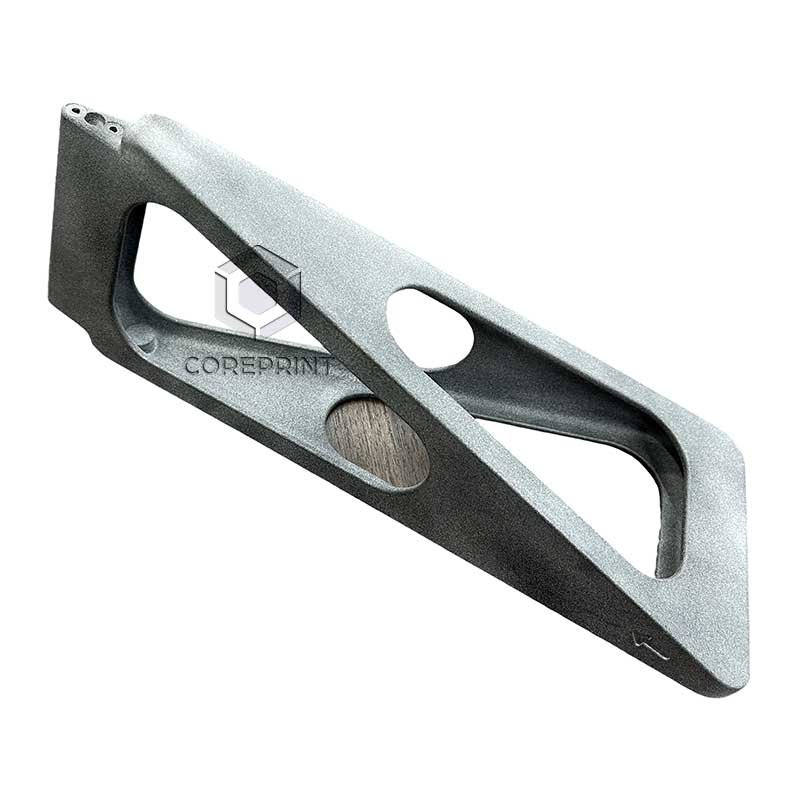
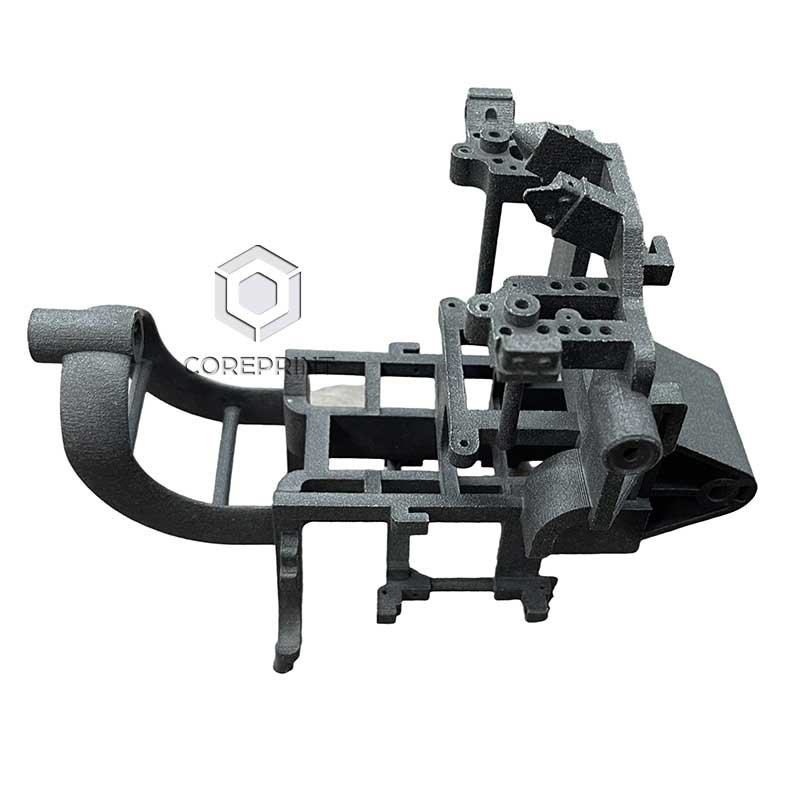
3D printing of molds with cooling channels offers numerous advantages:
-
Efficient Cooling & Shortened Cycle Time
Traditional molds use straight cooling channels that struggle to fit complex cavity shapes, leading to poor cooling and long cycle times. 3D printing enables **conformal cooling channels** (curved, spiral, or shape-fitting designs) that closely wrap around the mold’s high-temperature areas, significantly improving cooling efficiency. For example, an injection mold using conformal channels reduced cooling time from 45 to 28 seconds, boosting efficiency by 38%.
-
Structural Optimization & Extended Mold Life
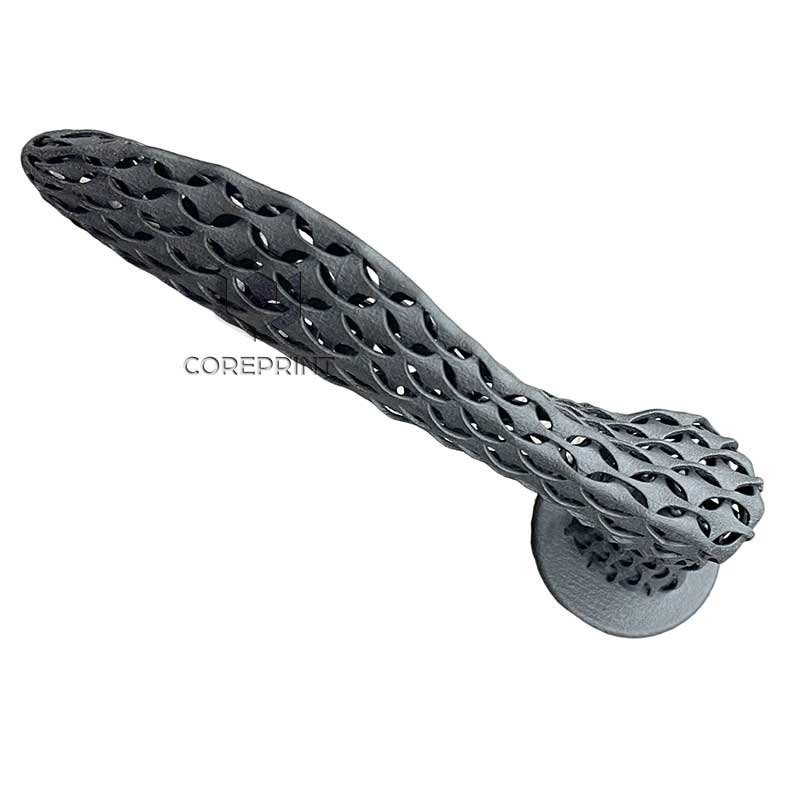
Traditional channels often have sharp corners that cause stress concentration and cracks. 3D-printed channels feature smooth bends and variable cross-sections, reducing stress and extending mold life. A die-casting mold, for instance, saw a 50%+ extension in fatigue crack occurrence cycles. Additionally, 3D printing can incorporate porous or lattice structures to reduce mold weight (by 30–50%) while maintaining strength, lowering equipment load.
-
Design Freedom for Complex Scenarios
For molds with multi-curved surfaces, multi-cavities, or undercuts, traditional methods require splitting and assembling components, prone to errors. 3D printing forms complex molds **in one piece**, integrating cooling channels and reducing assembly steps. It enables rapid design iterations via digital models, ideal for low-volume customization (e.g., prototyping automotive panel molds).
-
Cost Reduction & Enhanced Economic Benefits
As an additive process, 3D printing minimizes material waste (utilization >90% vs. 50–70% in traditional methods) and reduces secondary operations. While initial equipment costs are high, the long-term benefits for high-value molds—such as a 25% reduction in single-mold costs and 40% increase in annual production for an automotive mold company—make it cost-effective.